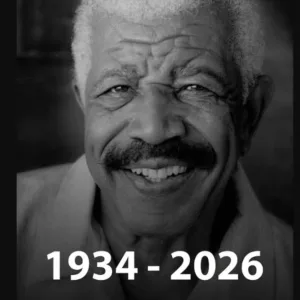
They kicked me out of the will reading. Three days later, the truth came out—and it changed everything I thought I understood about family, belonging, and what it really means to be chosen.
My stepfather never used the word step, not in passing, not in anger, not even as a joke. It simply did not exist in the language he built between us. From the moment he entered my life, he treated me with a steadiness that felt so natural, so unforced, that I never questioned where I stood. I wasn’t an addition or an adjustment; I was simply there, woven into the fabric of his everyday life. He was the one who waited patiently behind me as I wobbled on my bike, one hand hovering just close enough to catch me if I fell, never rushing, never letting go too soon. When I struggled in school, especially with math, he didn’t brush it off or hand me the answers. He sat down beside me, night after night, turning confusion into clarity with quiet persistence. He celebrated my smallest victories as if they were monumental, and when I failed, he made sure failure felt temporary, not defining. There were no grand speeches about love or commitment, no dramatic declarations meant to prove anything to anyone else. Instead, there were lunches packed before sunrise, doors double-checked before bed, and long conversations in the dark when something in my world felt too heavy to carry alone. He didn’t just step into the role of a father; he lived it, fully and without hesitation, in ways that didn’t seek recognition but left a permanent mark on who I became.
When he passed away, the absence was immediate and disorienting, like a structure I had leaned on my entire life had suddenly vanished without warning. The house felt quieter, but not in a peaceful way—more like something essential had been removed, leaving behind an echo that couldn’t be filled. At the funeral, people spoke about him with polished admiration, recounting his professional accomplishments and the respect he had earned in his field. They described a man of discipline, intelligence, and integrity, and every word they said was true. But as I stood there listening, I felt a growing distance between their version of him and mine. They didn’t talk about the man who knew exactly how I took my tea, who noticed when I was pretending to be okay, who sat on the edge of my bed during the hardest nights and promised, without hesitation, that I would get through whatever I was facing. Their stories were complete in one sense, but incomplete in another, missing the quiet, intimate moments that had defined my experience of him. I realized then that grief can be isolating, even in a crowded room, especially when the person you’re mourning meant something different to you than they did to everyone else. After the service, there was a brief mention that his will would be read later that week, and I made the decision to attend—not because I expected anything material, but because I wanted, in some small way, to be acknowledged as part of his life, as someone who had mattered.
That hope didn’t last long. When I arrived at the lawyer’s office, the atmosphere was tense in a way that felt subtle but unmistakable. Before I could even reach the door, his biological children stepped in front of me, forming a barrier that was as symbolic as it was physical. We had lived under the same roof for years, sharing space but not much else, maintaining a polite distance that never quite evolved into anything deeper. There had never been open hostility, but there had also never been warmth. One of them spoke, avoiding my gaze as if eye contact might complicate what they were about to say. “Only real family is allowed inside.” The words were delivered without emotion, almost as if they had been rehearsed, but their impact was immediate and sharp. For a moment, I felt a surge of resistance rising in me, an urge to argue, to defend my place, to list every memory that proved I belonged there as much as anyone. I could have reminded them of the nights he stayed up with me when I was sick, the years he invested in my growth, the countless ways he showed that I wasn’t an afterthought but a priority. But something held me back. Maybe it was exhaustion, or maybe it was the realization that any argument I made in that moment wouldn’t change how they saw me. So instead, I nodded, stepped back, and walked away, carrying with me a quiet kind of pain that felt deeper than anger—a sense of being erased from a story I had lived every day.
The bus ride home felt longer than usual, each stop marked not by distance but by the effort it took to hold myself together. I focused on small, mundane details—the hum of the engine, the pattern of passing streets, the rhythm of people getting on and off—anything to keep the emotions from spilling over in a public space. But when I finally reached home and closed the door behind me, the restraint gave way. I sat on the couch and let the tears come, not dramatically, not loudly, but steadily, the way I had learned to process things over the years. It wasn’t just grief for the man I had lost; it was the sting of being excluded, of having my place in his life questioned and dismissed so easily. It made me wonder, for the first time, whether I had misunderstood something fundamental, whether the connection I had felt so strongly had been one-sided or somehow less valid in the eyes of others. The days that followed were quiet, almost suspended in time. I went through the motions of daily life, but everything felt muted, as if I were moving through a version of reality that lacked its usual clarity. Then, three days later, my phone rang, and everything shifted again. It was the lawyer, his tone careful and deliberate, explaining that there had been an issue and that I needed to come in as soon as possible. My mind immediately went to worst-case scenarios—a complication, a mistake, perhaps even confirmation that I had no place in any of it after all.
When I arrived at the office, the atmosphere was completely different from what I had imagined. It was quiet, almost solemn, and noticeably empty. The lawyer greeted me with a seriousness that suggested this meeting was important, though he didn’t immediately explain why. He asked me to sit, then stepped into another room, leaving me alone with my thoughts, which were now racing in multiple directions. When he returned, he was holding a small wooden box, its surface worn in a way that suggested it had been handled many times over the years. He placed it gently in front of me and explained that my stepfather had left very specific instructions regarding it. This wasn’t part of the general proceedings, he said; it was something meant for me personally. My hands trembled slightly as I opened the box, unsure of what I would find but already feeling the weight of its significance. Inside were photographs, each one capturing a moment that felt both distant and vividly present at the same time. There we were by a river, awkwardly holding fishing poles, smiling with a kind of pride that came from simply being together. Another showed him laughing as I held up a fish so small it was almost comical, yet he looked at me as if I had achieved something remarkable. Beneath the photographs were school certificates I barely remembered, carefully preserved in a way that suggested they had meant more to him than they ever had to me. And then there were the letters—one for every year he had raised me, each written in his unmistakable handwriting, each filled with reflections, observations, and a kind of honesty that felt both intimate and overwhelming.
As I read through the letters, one after another, a clearer picture of his perspective began to emerge, one that I had sensed throughout my life but had never fully articulated. He wrote about watching me grow, about the moments that had worried him, about the times he had been proud, and about the quiet joy he found in being part of my life. He didn’t frame his role as an obligation or a duty; he described it as a privilege, something he had chosen and cherished. That word stayed with me, echoing through everything else he had written. At the bottom of the box was a copy of the will, and as I unfolded it, I felt a mixture of anticipation and apprehension. The document was clear and unambiguous: everything was to be divided equally between his two biological children and me. There was no hesitation in the language, no indication that this had been a difficult decision. It was presented as something straightforward, almost obvious. The lawyer confirmed that this arrangement had been established years earlier and had never been changed or questioned. Whatever resistance had existed during the reading, whatever attempts had been made to exclude me, they hadn’t altered the reality of what he had intended. I left the office holding the box close, feeling a complex mix of grief and gratitude, but also a sense of clarity that hadn’t been there before. In that moment, I understood something that had been quietly present all along: that love doesn’t rely on external validation, that it doesn’t need to be announced or defended to be real. It exists in actions, in consistency, in the choice to show up again and again, even when no one is watching. I wasn’t his family because of a label or a document. I was his family because he had decided I was, and he had lived that decision every single day.